Showing posts with label characters. Show all posts

Monday, July 22, 2019

Writing In Your Character's Voice #amwriting

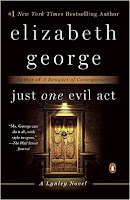
http://amzn.to/2d4opAP I'm reading JUST ONE EVIL ACT by Elizabeth George, a book in the Thomas Lynley series, and am struck by the way she uses different writing voices to represent her characters. George changes the tone, pace, 'sound', and feel of each scene depending on which character's point of view is represented. She does this by using that character's dialogue style and word choice, by deliberate selection of descriptive words in each scene, and by altering the structure of sentences.

It's fascinating. And effective. As a writer, I hope to emulate what she's doing. Maybe you will, too.


A bit of background: Elizabeth George's Lynley novels are set in current-day England and feature two main characters, Detective Inspector Thomas Lynley and Detective Sergeant Barbara Havers. Although he doesn't flaunt the fact, and indeed prefers to be judged based on his performance rather than his peerage, Lynley is the eighth Earl of Asherton. His speech, temperament, movements, and choices (from life choices to which socks to wear today) all reflect this.
Havers has had a difficult life and everything about her - speech, temperament, movements, and choices - reflects her background.
In short, Lynley is refined in everything he does and Havers is an unmade bed, physically and emotionally.

Elizabeth George writes Thomas Lynley's point of view chapters in a smooth, calm, and controlled fashion, reflecting Lynley's personality. When Barbara Havers is the point of view character, George's style becomes longer-winded, less formal, and harried. Haver's life is a mess and each of her scenes reinforces that fact.

These are subtle differences, written so well that a reader hardly notices a change from one scene to the next, but feels the change and the character's personality intimately. As a reader, George's techniques draw me in to each character's world.

Here are two examples of how George's style subtly develops each character. This scene occurs after Barbara Havers learns that a close friend has deceived her:

If this was true, it held up to doubt everything the Pakistani professor had said and done from that point forward. And if everything he had said and done from that point forward was one variation or another on a lie, then Barbara wasn't sure what she would do about that fact or to whom she would give that information.
The only answer seemed to be food. When she arrived home, she gobbled down a double takeaway portion of haddock and chips and followed this with treacle tart and a side of Victoria sponge. She quaffed a bottle of lager as she ate and finished off her meal with a cup of instant coffee. Accompanying this, she dipped into a packet of salt-and-vinegar crisps, after which a virtuous apple assured her that her arteries would be thoroughly cleansed if she munched upon it hard and long enough.
Then, no longer could she put off the phone call to Italy without putting herself into some sort of caloric stupor. She lit a fag and punched in Azhar's number. She'd never dreaded a phone call so much in her life. She was going to have to tell him everything: from the Love Rat Dad story to the claims made by the private investigator. In neither instance did she see that she had any choice.

I've got indigestion by association after reading about Barbara Havers' dinner and can physically feel her stress. The sentences run on and George uses words like 'gobbled', 'quaffed', and 'finished off' to show us Havers' distress. George could've told us that Havers was confused and angry, but instead she sends Havers on an eating binge, which is just how Havers would deal with discomfort at having to confront a friend she suspects of lying.

The next few paragraphs show Lynley at dinner with a woman he very much cares about, as she breaks off their relationship:

She smiled, it seemed, in spite of herself. "You know what I mean. You deserve someone who is willing and able to be one hundred percent for you, open to you, accepting of you...whatever you want to call it. I'm not that person, and I don't think I could be."
Her declaration felt like the thinnest of rapiers. It slid without effort under his skin, barely felt until the bleeding began. "So what are you saying, exactly?"
"I hardly know."
"Why?"
She looked at him. He tried to read whatever he could on her face, but time and circumstance had made her guarded, and he couldn't blame her for the walls she built. She said, "Because you're not an easy man to walk away from, Tommy. So I'm very much aware of the necessity of walking away and the marked reluctance I feel about doing so."

He nodded. For a moment they ate as the sounds of the dining room rose and fell around them. Plates were removed. Other plates came. He finally said, "Let's leave it at that, for now."

This passage causes no indigestion, but the turmoil beneath Lynley's reserved facade is clear. I have no idea what they ate, but I can feel the tension in their dinner through those six paragraphs. George could've told us that Lynley's heart was breaking, but instead she showed us.

It takes a skillful author to change styles between different point of view scenes and use each style to show so much about a character. Is this something you've noticed in your reading, or a skill you use in your writing? Is this type of showing a character's personality and development important to you?


photo credit: Seafood Medley via photopin (license)
photo credit: dinner party via photopin (license)

Wednesday, May 9, 2018

An Unexpected Antagonist - The Character We Love to Hate #amwriting #amreading


A reader recently asked me which of the baddies in my books has been my favorite - which did I have the most fun writing about and making readers love to hate.


That made me pause, because I don't view my characters in terms of good or bad. My characters just are. They each develop the role they play, and each has their own personality. But with a little prodding, I realized that the character I get the most feedback about as detestable is a police officer named Hugo Petchard. He showed up completely unexpectedly as I wrote THE DEVIL OF LIGHT, but as with all of my characters, he popped up at just the right time. I thought he would be a minor character and perhaps come and go quickly, but without fail he has turned up in all three Cass Elliot novels. Although he does play a minor role most of the time, he and his love interest ended up dramatically impacting the plot in AVENGERS OF BLOOD.

Let me tell you a little about him, and then you can tell us what you think about his detest-ability:

Officer Hugo Petchard is an absolute snot, a big fish in a small pond. (In his own mind, he pronounces his name PetCHARD, with a kind of French flair. But when readers speak about him, they call him PETcherd, with a bit of a redneck twang - he really hates that.) Despite having been given the grand name of Hugo, he’s small in stature, which bothers him mightily. Petchard has his job because his daddy has money and the Forney County Sheriff, Bill Hoffner, owes Daddy for making significant campaign contributions. Deep down, Petchard suspects that he doesn’t have what it takes to be a real police officer. That unacknowledged insecurity makes him show off in ways that inevitably lead to embarrassment for himself, his fellow officers, and occasionally the entire sheriff’s department.


Petchard is the kind of person we’ve all worked with who thinks he’s important / intelligent / gorgeous / witty / and dead sexy - why wouldn't everyone adore him and why isn't he already in charge around here? In reality, he's a bumbling buffoon and totally incapable of self examination. Petchard is the guy who raises your blood pressure with a single superior snort. He’s that co-worker: the one the boss tolerates despite his incompetence, the one the boss refuses to fire. It’s a blast to put Petchard in positions where he has the potential to succeed, but because he can’t contain his ego, he ends up falling on his face. It’s also fun to put Sheriff Hoffner in the position of having to defend Petchard’s stupidity to keep the campaign dollars flowing.


Writing scenes where Petchard appears makes me laugh and cringe at the same time. I love and hate him in equal measure. My other characters seem to simply despise him.

What do you think? Is Hugo Petchard the kind of character you could love to hate?

Monday, June 2, 2014

How Many Characters Is Too Many? #amreading

I'm about halfway through Believing the Lie, one of Elizabeth George's Inspector Lynley novels, and just realized how many characters she's woven into this story. There are the same half dozen primary characters that run through the series, but this book has a host of others that are key to the plot - at least a dozen who had motive, means, and / or opportunity to commit the murder Lynley and team are investigating, plus a few other supporting characters with important roles.

What surprised me is that I am halfway through the novel and only now realizing how many characters she's created. That tells me George has done a seamless job of building these characters in my mind, to the point that I have no problem remembering who is who and how they fit into the mystery and each other's lives.

I realize that some books have many more characters than this - particularly if they span generations or move into other worlds. But mysteries are usually pretty compact when it comes to characters that are central to the story. There are always those characters necessary to move the plot along - detectives, lab technicians, folks who knew the victim but aren't actual suspects - but the core characters essential to the mystery remain limited.

I wondered how George had done it. How she managed to pull me into this world that's so busy with people, yet help me keep them all straight. And here's what I think:


1.  She introduces the characters at a reasonable pace over the first third of the book, giving me some history about them and their place in the story. Just like in a crowd at a party, I have a better chance of remembering people when we get to know each other a little when we're introduced.


2.  George gives me touchstones for each character, a way to remember them. Sometimes it's a physical characteristic, like the journalist who's nearly seven feet tall and has blazing red hair. Other times, it's a personality tick, like the kid who tears at the back of his hands when anger overwhelms him. With another character, George uses the woman's constant scheming to bring her role in the story back to me.

3.  She uses those touchstones in each scene where that character appears. Sometimes by mentioning the hair or the journalist's size. For the scheming character, George references the woman's Zimmer frame (walker). Those two words remind me that she's the character who's lying to her parents about her health, and blackmailing her father over an infidelity.


4.  George gives her characters distinct names and there's very little room for confusion. Bernard is the dead man's (Ian's) uncle and isn't sure Ian's death was accidental; Kevah is Ian's gay lover (or maybe he isn't gay, and only wanted Ian's property); Mignon is Ian's scheming cousin; Manette is her twin and opposite in personality; Zed is the bumbling journalist; Vivienne was (and might still be?) Bernard's secret mistress.

5.  The last thing George does is build a compelling story. One that absorbs me. That fact alone keeps me interested in the characters, regardless of how many there are. This is a mystery and so far, there's only one murder. I usually prefer a few more, but in this case, I need to know who killed Ian, or if his death was just an accident as the coroner ruled.

Is it possible to have too many characters in one book? Oh yes. But a talented author finds ways to anchor her characters in her reader's minds, helping them come to know these characters as if they were real.

How do your favorite authors help you remember their characters? If you write, how do you help readers keep track of your characters?

http://venturegalleries.com/author/gaelynnwoods/


photo credit: Alexis Gravel via photopin cc
photo credit: x-ray delta one via photopin cc

photo credit: Gae-Lynn Woods, 2013

Monday, February 3, 2014

A Girl Called Gus - The Art of Naming Characters

I've always been fascinated by names. Probably because Gae-Lynn is so uncommon. But having a weird first name isn't enough for my family. I'm also blessed with an unusual nickname. Seems my paternal grandfather held me as a howling, red-faced newborn and said, "She looks like a Gus."

And that was that.
 
Family and friends call me Gus, I'm Auntie Gus to my nieces and nephews, and my husband calls me 'Gus the Destroyer' because it ain't been built that I can't break. In fact, Gus is the one word I hear in any circumstance. (Watching people react to a girl called Gus is pretty humorous.)

My name and nickname are part of who I am, how I define myself, and perhaps how others define me. If I had to choose which name, Gae-Lynn or Gus, suited me best, I'd struggle. Both are me.

Names are important, aren't they? Parents agonize over what to call their offspring. Some believe that a name influences their child's personality and future success and happiness. Some delay naming their kids until after birth. In certain families, the naming of a child can divide loyalties or guarantee inheritances.

Sid and her first calf

[We have no kids and there's no money hanging in the balance, but the name game affects us, too. Our cows have names, usually influenced by their personalities. Sid Vicious has a quiff and an erratic personality like the late punk rocker. Sweet One simply is. Our bull is Elvis because of the peculiar way his lip curls when he's chasing the ladies.]


Just as in 'real' life, choosing a name for your characters is important. It's heady stuff, bestowing a name that will live on as long as someone is reading your books.

Rightly or wrongly, names paint an image of a character's physical or emotional characteristics in my mind. Because this imagery is so powerful for me (and possibly for others), I let it influence my character names. For example:

Scott Truman - an honest, loyal, hardworking young cop
Judge Shackleford - a tough minded judge
Hugo Petchard - a distasteful cop who relies on his daddy's money to buy influence (he also isn't huge, which bothers him greatly)


I try to pick names that don't look or sound alike, unless it doesn't matter that they do. The Cass Elliot Crime Series includes teenaged twins, Matt and Mark Grove. They're always together, always in trouble, and it doesn't really matter who is who.


In cases where it does matter, I like unique names. It helps me set the stage for 'who' a character is and what he's about, both for myself and for the reader. Names are one way to give characters an identity, and they're an easy touchstone to help the reader stay focused.
 
The name thing matters so much to me that I've abandoned books if I can't keep the characters straight. I'm about to shut down a story now because two characters have names so similar I get confused: Mark and Marcus. Their roles are also similar (police / security guys) and that makes it even harder to keep them straight.
 
http://venturegalleries.com/author/gaelynnwoods/What about you? Do names resonate with you? Have you ever stopped reading because the names were so similar you couldn't keep them straight? Is naming an important part of your writing process?


photo credit: abbey*christine via photopin cc

photo credit: elisabet ottosson via photopin cc